

Showing posts with label History. Show all posts
Showing posts with label History. Show all posts
Historic 1899 Map of Fay Estate

Salem Statue stands atop a stone from these woods
 In the town of Salem, a statue of the settlement's founder, Roger Conant is raised atop an huge boulder, brought from the woods near Floating Bridge Pond in these here woods.
 The historic reference is found on the pages of Salem's City Guide: salemweb.com/guide/roger.shtml
History: Richard S. Fay testate argued by heirs
Reference:
http://books.google.com/books?id=x_M7AAAAIAAJ&pg=PA825&dq=%22richard+s+fay%22+testate&hl=en&ei=HQKvTsntC-bh0QHtxfmSDw&sa=X&oi=book_result&ct=result&resnum=1&ved=0CC8Q6AEwAA#v=onepage&q&f=false
Copy...
GARDINER et al. v. FAY et aL
(Supreme Judicial Court of Massachusetts.
Middlesex. Jan. 8, 1903.)
TRUST DEED—CONSTRUCTION-HEIRS—TIME
OF DETERMINATION.
1. A trust deed required the income to be paid to a certain person and his wife during their lives and the life of the survivor, and after his or her death to their "joint heirs" in the same way or manner that "intestate «states are divided at law." Held, that "joint heirs" meant the heirs of both at the time of the death of the survivor.
Case reserved from supreme judicial court, Middlesex county; Wm. Caleb Loring, Judge.
Bill In equity by Robert H. Gardiner and another, as trustees, against Dudley B. Fay and others, for a construction of the deed of trust. Deed construed.
Roland Gray, for Daniel B. Fay and others. Francis R. Bangs and Arthur D. Hill, for respondents.
KNOWLTON, C. J. The plaintiffs are trustees under a deed which conveyed real estate in trust, to permit Richard S. Fay and Catharine S. Fay, his wife, to occupy and improve it, or to receive the rents and profits of it "during their joint lives and the life of the survivor, and after his or her death to convey the same in fee to the Joint heirs of said Richard and Catharine in the same way or manner as intestate estates are divided at law; and in case there are no joint heirs of said Richard and Catharine, then to the heirs of the survivor; it being further understood, however, that said Richard and Catharine, or the survivor, may, by a declaration of trust in writing, or by letters testamentary, continue said estate in trust for the benefit of their heirs at law, as before named," etc. Richard S. Fay died on May 6, 1865, and Catharine S. Fay on November 26, 1901. They had four young children at the date of the deed, of whom one survived at the decease of Catharine. At the time of her death she also had numerous grandchildren.
The only question now left for the consideration of the court is, What is the meaning of the words "joint heirs," In reference to the time as of which the heirs are to be determined? The word "heirs" is a legal term, to be construed according to its strict technical import, .unless there is something in the context to control the meaning. Clarke v. Cordis, 4 Allen, 466-480. Sometimes it means children or issue, where it is plain that it is used in a popular sense, as a word of description referring to a certain class of persons. But in a deed where there is no reason to depart from the technical meaning, it is given its usual legal signification. The joint heirs of Richard and Catharine are the persons who are the heirs of both of them. In the ordinary signification of the word "heir", no one could be an heir of Catharine before her death. Xeino est hoores viventis. Richardson v. Wheatland, 7 Mete. 169; Houghton v. Kendall, 7 Allen, 72-75; Putnam v. Gleason, 99 Mass. 454; Putnam v. Storey, 132 Mass. 205-210; Wason v. Ranney, 167 Mass. 159, 45 N. E. 85. The foregoing cases go far toward settling the case at bar. The joint heirs of Richard and Catharine are the heirs of both at the death of the survivor. Their joint heirs could not be determined before that time, for one who died before the death of the survivor would uot be his or her heir. The words, "in case there are no joint heirs of said Richard and Catharine, then to the heirs of the survivor," have a clear and natural meaning, on the theory that the joint heirs are to be determined as of the time of the death of the surviving life tenant; for the words "joint heirs" would mean descendants then living. and, If there were none, the property would go to collateral heirs of the survivor. But they are Inapplicable to the facts with the other construction; for there were four children living at the date of the deed, and upon the other theory they, and any others who might come into being, would be considered joint heirs within the meaning of the deed, and there could not be a condition which would make the quoted words applicable. The words, "In the same way or manner as intestate estates are divided at law," mean that the children of a deceased child take their parent's share by right of representation. This provision is given its natural meaning if joint heirs are determined as of the time of the death of the survivor. But if the other construction is adopted, the remainder at the death of the surviving life tenant would be all vested In the living children, and the heirs, devisees, or assigns of the deceased children. It would be Impossible to apply the rule of distribution of intestate estates, since no grandchild could take directly as one of the joint heirs of the life tenants. The vested interests of deceased children would all have passed to their devisees, assigns, or heirs.
The trust property is to be conveyed to Dudley B. Fay, Richard S. Pay, Edward H. Fay, Katharine Fay, Richard Fay Parker, Augustine H. Parker, and Katherlne Everett, and William E. Stone and William F. Wharton, trustees under the deed of Henry M. Parker, In the shares and proportions to which they are severally entitled as heirs of Richard S. Fay and Catharine S. Fay, taking by right of representation, and as grantees under the deed of Henry M. Parker.
So ordered.
http://books.google.com/books?id=x_M7AAAAIAAJ&pg=PA825&dq=%22richard+s+fay%22+testate&hl=en&ei=HQKvTsntC-bh0QHtxfmSDw&sa=X&oi=book_result&ct=result&resnum=1&ved=0CC8Q6AEwAA#v=onepage&q&f=false
Copy...
GARDINER et al. v. FAY et aL
(Supreme Judicial Court of Massachusetts.
Middlesex. Jan. 8, 1903.)
TRUST DEED—CONSTRUCTION-HEIRS—TIME
OF DETERMINATION.
1. A trust deed required the income to be paid to a certain person and his wife during their lives and the life of the survivor, and after his or her death to their "joint heirs" in the same way or manner that "intestate «states are divided at law." Held, that "joint heirs" meant the heirs of both at the time of the death of the survivor.
Case reserved from supreme judicial court, Middlesex county; Wm. Caleb Loring, Judge.
Bill In equity by Robert H. Gardiner and another, as trustees, against Dudley B. Fay and others, for a construction of the deed of trust. Deed construed.
Roland Gray, for Daniel B. Fay and others. Francis R. Bangs and Arthur D. Hill, for respondents.
KNOWLTON, C. J. The plaintiffs are trustees under a deed which conveyed real estate in trust, to permit Richard S. Fay and Catharine S. Fay, his wife, to occupy and improve it, or to receive the rents and profits of it "during their joint lives and the life of the survivor, and after his or her death to convey the same in fee to the Joint heirs of said Richard and Catharine in the same way or manner as intestate estates are divided at law; and in case there are no joint heirs of said Richard and Catharine, then to the heirs of the survivor; it being further understood, however, that said Richard and Catharine, or the survivor, may, by a declaration of trust in writing, or by letters testamentary, continue said estate in trust for the benefit of their heirs at law, as before named," etc. Richard S. Fay died on May 6, 1865, and Catharine S. Fay on November 26, 1901. They had four young children at the date of the deed, of whom one survived at the decease of Catharine. At the time of her death she also had numerous grandchildren.
The only question now left for the consideration of the court is, What is the meaning of the words "joint heirs," In reference to the time as of which the heirs are to be determined? The word "heirs" is a legal term, to be construed according to its strict technical import, .unless there is something in the context to control the meaning. Clarke v. Cordis, 4 Allen, 466-480. Sometimes it means children or issue, where it is plain that it is used in a popular sense, as a word of description referring to a certain class of persons. But in a deed where there is no reason to depart from the technical meaning, it is given its usual legal signification. The joint heirs of Richard and Catharine are the persons who are the heirs of both of them. In the ordinary signification of the word "heir", no one could be an heir of Catharine before her death. Xeino est hoores viventis. Richardson v. Wheatland, 7 Mete. 169; Houghton v. Kendall, 7 Allen, 72-75; Putnam v. Gleason, 99 Mass. 454; Putnam v. Storey, 132 Mass. 205-210; Wason v. Ranney, 167 Mass. 159, 45 N. E. 85. The foregoing cases go far toward settling the case at bar. The joint heirs of Richard and Catharine are the heirs of both at the death of the survivor. Their joint heirs could not be determined before that time, for one who died before the death of the survivor would uot be his or her heir. The words, "in case there are no joint heirs of said Richard and Catharine, then to the heirs of the survivor," have a clear and natural meaning, on the theory that the joint heirs are to be determined as of the time of the death of the surviving life tenant; for the words "joint heirs" would mean descendants then living. and, If there were none, the property would go to collateral heirs of the survivor. But they are Inapplicable to the facts with the other construction; for there were four children living at the date of the deed, and upon the other theory they, and any others who might come into being, would be considered joint heirs within the meaning of the deed, and there could not be a condition which would make the quoted words applicable. The words, "In the same way or manner as intestate estates are divided at law," mean that the children of a deceased child take their parent's share by right of representation. This provision is given its natural meaning if joint heirs are determined as of the time of the death of the survivor. But if the other construction is adopted, the remainder at the death of the surviving life tenant would be all vested In the living children, and the heirs, devisees, or assigns of the deceased children. It would be Impossible to apply the rule of distribution of intestate estates, since no grandchild could take directly as one of the joint heirs of the life tenants. The vested interests of deceased children would all have passed to their devisees, assigns, or heirs.
The trust property is to be conveyed to Dudley B. Fay, Richard S. Pay, Edward H. Fay, Katharine Fay, Richard Fay Parker, Augustine H. Parker, and Katherlne Everett, and William E. Stone and William F. Wharton, trustees under the deed of Henry M. Parker, In the shares and proportions to which they are severally entitled as heirs of Richard S. Fay and Catharine S. Fay, taking by right of representation, and as grantees under the deed of Henry M. Parker.
So ordered.
History: Letters of Henry Wadsworth Longfellow
This letter was shared by a friend, TomO, who explains:
"Attached is a transcription of a letter from the poet Henry Wadsworth Longfellow, to his son Ernest. The letter is from Andrew Hilen’s 4 volume Letters of Henry Wadsworth Longfellow (Houghton Mifflin 1968). The Fays and Lynnmere (Fay Estate/ Spring Pond area) are mentioned a number of times in Longfellow’s letters. The Fays and Longfellows families were neighbors in Cambridge and Willy Fay, R.S. Fay’s youngest child, was Charles Appleton Longfellow's, Henry W. Longfellow’s son, best friend. Willy Fay took Charles with him to visit his brother Captain Richard S. Fay Jr. at General Ben Butler’s Headquaters at Ship Island La. during the first year of the civil war. Capt Fay was Gen. Butlers military secretary. H.W. Longfellow had hoped that this trip would satisfy young Charles’ enthusiasm for the war. I wonder if Longfellow ever alluded to Spring Pond in his poems. Hope you find this interesting." - TomO
Letters of Henry Wadsworth Longfellow*
To; Earnest Wadsworth Longfellow
Nahant Aug 1866
My Dear Erny,
I have just received your long and interesting letter from Interlachen, and am truly sorry that our letters did not reach you more promptly and regularly. You are slightly sarcastic on that topic. But I wrote you on the 27th of July, and Alice has written since. All your letters have been answered with speed.
I am afraid you are overdoing the mountain business with Crowninschield. Why expose yourself to so many perils? You do not belong to the Alpine Club; and if you go at this rate I shall only be to happy to have you out of Switzerland, and out of harm’s way, as you probably will be when this reaches you. Such over fatigue cannot be good for your head.
The Nahant home is quite alive and merry this week. Sumner, Rolke and Greene have been here; and now Alice has four upper rooms full of her friends. She has Katy Howe, and Arria Dixwell and Alice Jones and is expecting Cora [Spellman] tomorrow. We also have Josie Ames and Henrietta Dana; and if that is not a full house, I am mistaken. To-day is windy and cold; and puts a damper on the hilarity: but no doubt it will break forth tomorrow in grand style.
The “Alice” reached England in nineteen days. We had one Telegram by Atlantic Cable and one letter from Charlie giving part of his Journal. He is in high spirits. You will be seeing him so soon, that it is not worth the while to go into details. I do not think he was in half so much danger as you have been among the mountains.
Interlachen is charming; I hope you and Uncle Sam enjoyed it, and had great weather. It seems to me the most delightful resting place in all Switzerland.
It is bitter cold here at Nahant, more like Autumn than Summer. I am quite ready to go back to Cambridge. I hope you are; and that you will feel inclined to celebrate your twenty first birth-day at home.
You will not see the famous Dresden Gallery, at least not in Dresden. The papers say it has gone to England. What a pity, Uncle Sam will lament.
I am now going over to Lynnmere to read Charlie’s letter to Willie Fay who has been laid up all summer with a lame knee. So farewell and take better care of yourself in the future. We all send much love to you and U. S. and if I do not write to him it is because I write to you, and have such a multitude of letters to write.
Ever most affectionately
H.W.L.
* Hilen, Andrew, Letters of Henry Wadsworth Longfellow Vol IV Houghton Mifflin 1968 p173
"Attached is a transcription of a letter from the poet Henry Wadsworth Longfellow, to his son Ernest. The letter is from Andrew Hilen’s 4 volume Letters of Henry Wadsworth Longfellow (Houghton Mifflin 1968). The Fays and Lynnmere (Fay Estate/ Spring Pond area) are mentioned a number of times in Longfellow’s letters. The Fays and Longfellows families were neighbors in Cambridge and Willy Fay, R.S. Fay’s youngest child, was Charles Appleton Longfellow's, Henry W. Longfellow’s son, best friend. Willy Fay took Charles with him to visit his brother Captain Richard S. Fay Jr. at General Ben Butler’s Headquaters at Ship Island La. during the first year of the civil war. Capt Fay was Gen. Butlers military secretary. H.W. Longfellow had hoped that this trip would satisfy young Charles’ enthusiasm for the war. I wonder if Longfellow ever alluded to Spring Pond in his poems. Hope you find this interesting." - TomO
Letters of Henry Wadsworth Longfellow*
To; Earnest Wadsworth Longfellow
Nahant Aug 1866
My Dear Erny,
I have just received your long and interesting letter from Interlachen, and am truly sorry that our letters did not reach you more promptly and regularly. You are slightly sarcastic on that topic. But I wrote you on the 27th of July, and Alice has written since. All your letters have been answered with speed.
I am afraid you are overdoing the mountain business with Crowninschield. Why expose yourself to so many perils? You do not belong to the Alpine Club; and if you go at this rate I shall only be to happy to have you out of Switzerland, and out of harm’s way, as you probably will be when this reaches you. Such over fatigue cannot be good for your head.
The Nahant home is quite alive and merry this week. Sumner, Rolke and Greene have been here; and now Alice has four upper rooms full of her friends. She has Katy Howe, and Arria Dixwell and Alice Jones and is expecting Cora [Spellman] tomorrow. We also have Josie Ames and Henrietta Dana; and if that is not a full house, I am mistaken. To-day is windy and cold; and puts a damper on the hilarity: but no doubt it will break forth tomorrow in grand style.
The “Alice” reached England in nineteen days. We had one Telegram by Atlantic Cable and one letter from Charlie giving part of his Journal. He is in high spirits. You will be seeing him so soon, that it is not worth the while to go into details. I do not think he was in half so much danger as you have been among the mountains.
Interlachen is charming; I hope you and Uncle Sam enjoyed it, and had great weather. It seems to me the most delightful resting place in all Switzerland.
It is bitter cold here at Nahant, more like Autumn than Summer. I am quite ready to go back to Cambridge. I hope you are; and that you will feel inclined to celebrate your twenty first birth-day at home.
You will not see the famous Dresden Gallery, at least not in Dresden. The papers say it has gone to England. What a pity, Uncle Sam will lament.
I am now going over to Lynnmere to read Charlie’s letter to Willie Fay who has been laid up all summer with a lame knee. So farewell and take better care of yourself in the future. We all send much love to you and U. S. and if I do not write to him it is because I write to you, and have such a multitude of letters to write.
Ever most affectionately
H.W.L.
* Hilen, Andrew, Letters of Henry Wadsworth Longfellow Vol IV Houghton Mifflin 1968 p173
Wintertime in the old Fay Estate
The gated entrance to the Fay Estate of Lynn, Peabody and Salem, through Fay Road, was guarded by the Gatekeeper who lived in the cottage to the right. The early entrance to the estate was through Spring Pond Road. Riding through the long roads on horse and carriage to reach the mansion, visitors were greeted by the grace of the landscape with beautiful and exotic trees and shrubs along the way, in the scene of an old English Manor estate. The Gatekeepers Cottage has received some modifications today. The cottage, three other buildings and many of the *trees still remain.

peace
Old photo of Fay Road in wintertime
c. early 1900's, Fay Road in wintertime, in the Fay Estate of Lynn

peace
Old newspaper clipping: Mineral Spring Hotel
The Mineral Spring Hotel was in Lynn, bordering the Salem/ Peabody line, where the Fay Mansion later once stood. The tract of land in Lynn, Salem and Peabody was mostly pasture, with some forest, creating an enjoyable retreat on the facing hillsides of Spring Pond. In 1849, Richard Sullivan Fay bought the hotel and converted it into a residence, utilizing the pastures and planting an exotic natural arboretum.
From the Salem Gazette, July 2, 1841

More info on the hotel can be found here.
peace
Ice Fire
7 Ice Houses in South Peabody, mysteriously caught fire, all at once.
Thank you to Tom O. for sharing this old newspaper article,
Click to view...

Remnant piers on shore...

Map of Fay Arboretum
Mr. Fay's Arboretum was once a well known place, notable for being one of the earliest arboretums, predating Olmstead and for having trees being sighted here first in the country. People enjoyed walking the estate, admiring the vast variety of native and exotic foliage. Below is a map of the inventoried flora in the historic Fay Estate. There is more area (blank areas) to further inventory, as this is only an initial study. The love of nature and history of this hidden treasure is one of the biggest reasons why so many wish to preserve the entire area. In comparing the species of flora with historic research, this drawing reveals the hidden gem we have here in Essex County, in Lynn, Peabody and Salem, MA. I hope regional planning includes uniting these three cities to preserve this old paradise and beloved area. Three cities are connected here by the recreational wooded areas around Spring Pond.
The arboretum map will be updated on occasion, when a new inventory of flora is made.
To view, click on map, and again to zoom in. Right-click to download.

peace
Mineral Spring Hotel Adverts
Thank you to TomO for sharing these adverts he found in the Salem Gazette from the early 1800's...


For more info on the Mineral Springs Hotel, click here...
peace on
"archeologically sensitive"
Remember all the 'crazy' talk here of the site being a 'potential' Native American ground?
Although there have been no previous records with the State (...actually I don't know this), discoveries can be found at any time.
Here is a letter from a Senior Archeologist, at the Massachusetts Historical Commission, written in 2008, stating: "portions of the property may be archeologically sensitive".
Please Camp Lion and City of Salem (property owners), call for an archeological dig to investigate, and apply for cultural grants in preserving this land.

peace on
~ Katerina
The Fays speak from the grave
Thank you to Tom Osborne who shared these photos of the tombs of Richard Sullivan Fay and his wife Catherine, where they speak from the grave to SAVE SPRING POND WOODS! Richard Sullivan Fay planted at minimum 200 acres of exotic trees imported from all parts of the world. Today the proposed Lowe's/ Super Wal-mart scheme threatens the forest sprouted by him.
 Washington Irving would of said as he did of his friend, Richard Sullivan Fay...
“He who plants an oak, looks forward to future ages, and plants for prosperity. Nothing can be less selfish than this (...please remember this the next time people are being called selfish for wanting to preserve community heritage and these woods). He cannot expect to sit in its shade, nor enjoy its shelter; but he exults in the idea that the acorn which he has buried in the earth grow up into a lofty pile, and shall keep on flourishing and increasing and benefiting mankind, long after he shall have ceased to tread his paternal fields.”


“He who plants an oak, looks forward to future ages, and plants for prosperity. Nothing can be less selfish than this (...please remember this the next time people are being called selfish for wanting to preserve community heritage and these woods). He cannot expect to sit in its shade, nor enjoy its shelter; but he exults in the idea that the acorn which he has buried in the earth grow up into a lofty pile, and shall keep on flourishing and increasing and benefiting mankind, long after he shall have ceased to tread his paternal fields.”

Benjamin W. Crowninshield speaks from his grave
Thank you to Tom Osborne for sharing this image .

One of the first impressions made in history was in the day of the Third Plantation of the Massachusetts Bay Colony. In 1700, an early settler was drawn to an estate on the hillsides by Spring Pond, in the name of Dr. John Casper Richter Von Crowninshield (Johannes Kaspar Richter Von Kronenscheldt, as first spelled), who was among one of the first families to settle in this country and the first in the country to descend the respectable (Boston Brahmin) Crowninshield Family of Boston whose later generations became so prominent in Massachusetts affairs, cradled by Spring Pond.
Among the heirs of the family country estate and family line was Benjamin Williams Crowninshield. He served as United States Secretary of the Navy, Representative of the United States Congress, member of the Massachusetts State Senate, in the Massachusetts House of Representatives, and became one of the first directors of the Merchant's Bank of Salem creating the East India Trade of Salem; The USS Crowninshield Naval Destroyer was named in his honor.
The Lion-Heart... The Crucible... The tall tale... The Richards
On June 10th, 1696 Daniel Richards, mariner of Lynn, released lands of inheritance at Spring Pond. This is the earliest trace, old history books tell.

One of the earliest court documents for Edward was in July 1646 when he was charged for public lying, saying that he was one of ten pirates who stole a ship to come to New England. They killed the entire crew, and Edward was made captain. When they were overtaken, all the pirates were killed but Edward, since he was a minor. For this tall tale he was fined 10 s, and made to apologize in church before the entire town.
In June 1670, as the town of Lynn began dividing common land, Edward was in court again as he "stood with a club to defend the land boundaries." .... His first wife, and mother of all recorded descendants, is still undocumented. His second wife, the widow Ann (Ballard) Knight brought to their marriage inheritance of an inn, qualifying all his family descendants today as members of the Descendants of Colonial Tavern Keepers- and in July 1675 the court renewed his license to keep an ordinary [inn].
Edward died just two years before the witchcraft delusion in neighboring Salem. His son Daniel was to marry a survivor of the hysteria, Elizabeth (Bassett) Proctor, helping raise her five children. One of Edward's descendants, Joseph Richards, married Mary Bowden, a great granddaughter of a less fortunate martyr of 1692, Rebecca (Towne) Nurse.
Children:
1st mar. appx 1643, Lynn MA, phps Mary FARNSWORTH
1. John RICHARDS, b. appx 1645 in Lynn MA; d. appx March 1712/13, Lynn MA
2. Bathsheba RICHARDS, b. appx 1647 in Lynn MA; mar. 15 Apr 1667 in Lynn MA to Robert BRINSDON, of Boston MA
2nd mar. appx 1649, Lynn MA, to Ann [Ballard] KNIGHT
3. Daniel RICHARDS, b. appx 1653 in Lynn MA; int. 22 Sep 1699 in Lynn MA to Elizabeth BASSETT-PROCTOR, whose husband was killed in Salem witchcraft hysteria [see Arthur Miller's The Crucible]."
Surname:
The name 'Richard' itself is Norman, and did not appear in England until after the Conquest in 1066. The name was still considered 'foreign' among the people of England and Wales until the reign of Richard the Lion-Heart, 1189-1199. Then, common people throughout the realm began naming their sons after the short-lived, but heroic king. "
Thank you to Tom Osborn for sharing the link to the Richards family website.

He inherited Spring Pond Farm from his father Edward Richards. The following story is extracted from the Richards Family History Website, telling us interesting stories of a "tall tale" and of his daughter-in-law Elizabeth Basset-Proctor, an accused witch who survived the Salem Witch Trials, as mentioned in 'The Crucible'...
"Edward Richards, chr. 26 Jan 1615/16 at St. Andrew's parish, Plymouth, Devonshire; d. 26 Jan 1689/90 Lynn MA
Edward seems to have arrived in Lynn, Essex County, Massachusetts Bay Colony in the summer of 1633 or 1634 as a young, teenaged, indentured servant for Sir John Humphreys, probably as an apprentice 'joiner', a carpenter doing interior detail, working on the estate of the Assistant Governor. He ended his indenture and took the Freeman's Oath in 1640. Since there is no land title, it is likely that Edward was a squatter on the Humphreys estate, and was permitted to keep a small portion during the depopulation of New England when Puritans returned to fight in the English Civil War. His homestead referred to as Spring Pond Farm in later years.
Edward seems to have arrived in Lynn, Essex County, Massachusetts Bay Colony in the summer of 1633 or 1634 as a young, teenaged, indentured servant for Sir John Humphreys, probably as an apprentice 'joiner', a carpenter doing interior detail, working on the estate of the Assistant Governor. He ended his indenture and took the Freeman's Oath in 1640. Since there is no land title, it is likely that Edward was a squatter on the Humphreys estate, and was permitted to keep a small portion during the depopulation of New England when Puritans returned to fight in the English Civil War. His homestead referred to as Spring Pond Farm in later years.
One of the earliest court documents for Edward was in July 1646 when he was charged for public lying, saying that he was one of ten pirates who stole a ship to come to New England. They killed the entire crew, and Edward was made captain. When they were overtaken, all the pirates were killed but Edward, since he was a minor. For this tall tale he was fined 10 s, and made to apologize in church before the entire town.
In June 1670, as the town of Lynn began dividing common land, Edward was in court again as he "stood with a club to defend the land boundaries." .... His first wife, and mother of all recorded descendants, is still undocumented. His second wife, the widow Ann (Ballard) Knight brought to their marriage inheritance of an inn, qualifying all his family descendants today as members of the Descendants of Colonial Tavern Keepers- and in July 1675 the court renewed his license to keep an ordinary [inn].
Edward died just two years before the witchcraft delusion in neighboring Salem. His son Daniel was to marry a survivor of the hysteria, Elizabeth (Bassett) Proctor, helping raise her five children. One of Edward's descendants, Joseph Richards, married Mary Bowden, a great granddaughter of a less fortunate martyr of 1692, Rebecca (Towne) Nurse.
Children:
1st mar. appx 1643, Lynn MA, phps Mary FARNSWORTH
1. John RICHARDS, b. appx 1645 in Lynn MA; d. appx March 1712/13, Lynn MA
2. Bathsheba RICHARDS, b. appx 1647 in Lynn MA; mar. 15 Apr 1667 in Lynn MA to Robert BRINSDON, of Boston MA
2nd mar. appx 1649, Lynn MA, to Ann [Ballard] KNIGHT
3. Daniel RICHARDS, b. appx 1653 in Lynn MA; int. 22 Sep 1699 in Lynn MA to Elizabeth BASSETT-PROCTOR, whose husband was killed in Salem witchcraft hysteria [see Arthur Miller's The Crucible]."
Surname:
The name 'Richard' itself is Norman, and did not appear in England until after the Conquest in 1066. The name was still considered 'foreign' among the people of England and Wales until the reign of Richard the Lion-Heart, 1189-1199. Then, common people throughout the realm began naming their sons after the short-lived, but heroic king. "
Thank you to Tom Osborn for sharing the link to the Richards family website.
Letters from the Civil War: The Fay Light Guard
Here are two letters from the Civil War. Eben Parsons, First Lieutenant writes to Richard Sullivan Fay, that the army he commissioned was named in his honor. Mr. Fay responds with gratitude. Richard Sullivan Fay's Estate surrounded Spring Pond, and was partially in Lynn and Salem with a few acres in Peabody.

The Laundry Building

Here remains the old "Laundry Building" of the Fay Estate. It was just up for sale (trying to sell for over a year now). This is the current residence of the former mayor of Lynn- Antonio Marino, who recently voiced his opinion in the Salem and Lynn newspapers. Marino was a mayor in a period of economic downturn for the city, when downtown seen a decline loosing the heart of business diversity to the big malls in other townships.
How can anyone follow economic advise from a leader who reined in a city's downfall. How can we value the thoughts of someone who is trying to leave the area? How can such statements in the paper echo the words of other small minded politicians who have ignored the petition outcry from the people? Don't take my advise either on the economy... the real issue is- if these developments want to happen, they can find another site which will not hurt society, take away open space, hurt the environment and places with history.
I do hope this home goes up for sale again, so the next owner will hopefully have pride and respect in wanting to preserve and protect the area... instead of wanting to bring our cultural landscapes of heritage to the laundry.
peace
Famous painter drawn to Fay Estate (salem side?)
 The famous "Lynn Beach Painters" painted ocean scenes from Revere to Marblehead. In 1882, C.E.L. Green made it inland to paint the Fay Estate. From studying this image of an oil on canvas it appears the barn could of been on the Salem side, by the way of the sunrise, tree line (pertaining to history) behind the barn, and geometry of the stone walls. Have we another hunt in the wilderness to find the old slabs. We may have an idea of which direction the famous sheep of Richard Sullivan Fay were raised, from another view of an older painting of the old Twin Springs Hotel (later Fay Mansion), showing animals grazing towards Salem. It's encouraging to see a tree line behind the barn... this ties into the trees pertaining to history we've been finding. Isn't it more fun when history becomes a scavenger hunt?
Source:
Newspaper article from Daily Item, August 5, 1916
Image of painting from book "The Lynn Beach Painters: Art Along the North Shore 1880-1920"
peace
Lo, the friendly Native American
Here is the story of Lo the friendly Native American who was slain at Spring Pond on the Lynn/ Salem border. Click to view, and then again to zoom in...

peace

Reference: The Register of the Lynn Historical Society, For the Year 1911, p. 110
peace
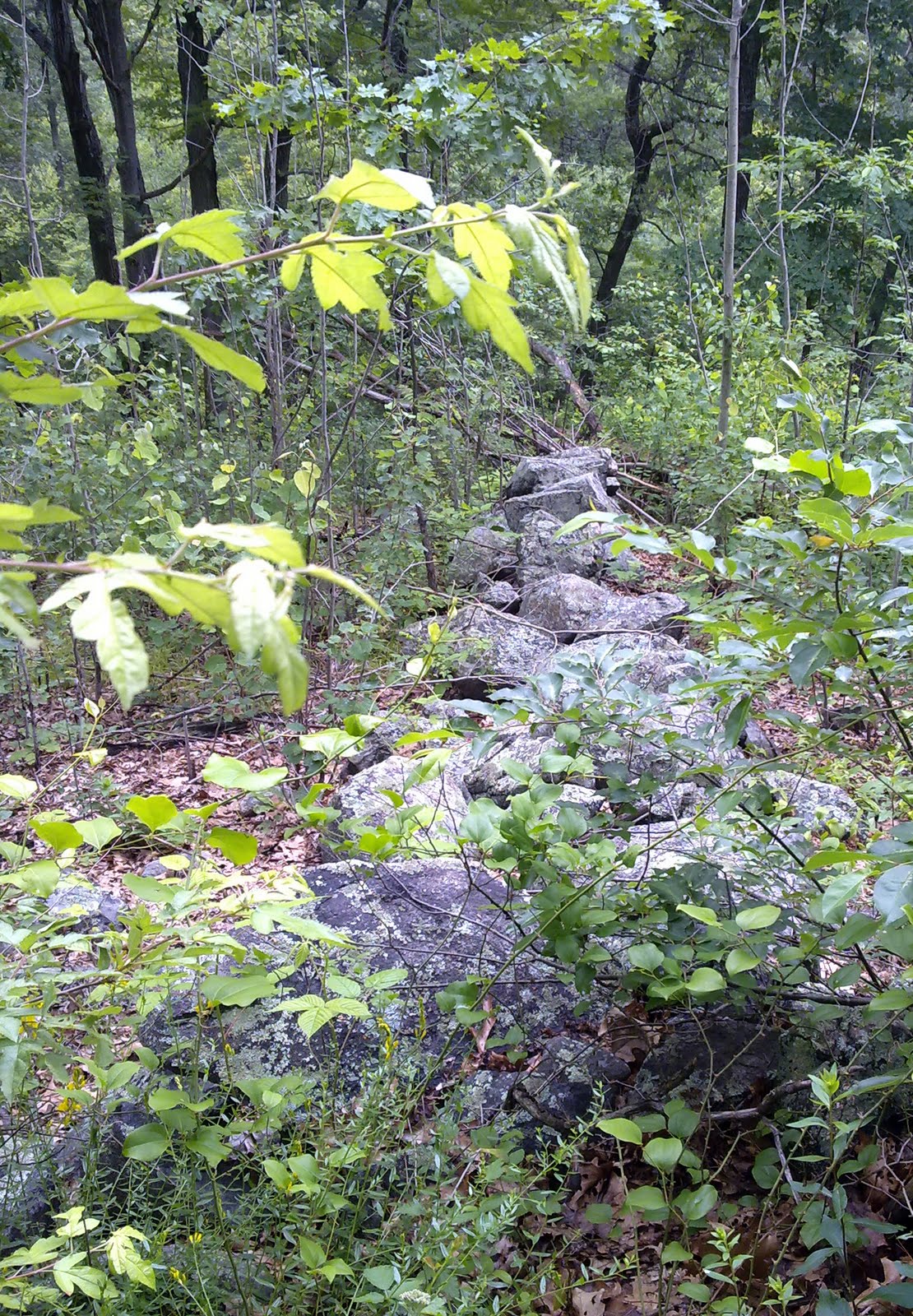
Old stone walls
The old stone walls around Spring Pond are a monument of the early settlers, rooting to stories of the past, lining the old Crowninshield and Fay Estate, and other farmlands. Remnants of the New World are a pleasant reminder to sightseers who discover them in nature, running along the old lands of Spring Pond, in Lynn, Peabody and Salem, MA.




1896- Boy gets shot
On April 19, 1896 - boy gets shot accidentally in the woods near Spring Pond, while chasing squirrels with his friend.

Subscribe to:
Posts (Atom)