Welcome. A moment-to-moment story...
Showing posts with label Fay Estate. Show all posts

Richard Fay planted the forest with his own hands...

Richard Sullivan Fay

History of Essex County Massachusetts
with Biographical Sketches, Volume 1 - Google Books

He commenced at once... "covering the hills with innumerable trees, many of which he planted with his own hands.  He imported larches, maples, firs, pines in large quantities, planted acorns constantly in his walks about the estate, and succeeded in converting a rough and somewhat unattractive landscape into a variegated forest, through which winds an avenue of great beauty, bordered by deciduous and evergreen trees distributed with great taste, and constituting a charming combination of variety and luxuriance of foliage"


Historic 1899 Map of Fay Estate

This older map of the Fay Estate found at the Register of the Salem Deeds, was drawn in 1899, and has not been posted here before.  This map names and defines the land of the Fay Estate, including the location of the buildings (Mansion, Carriage House, Servant's quarters, Laundry Building, Gatehouse) to which a few remain today on the Lynn side, except for the mansion.  The Fay Estate grew to about 500 acres around Spring Pond, partially Lynn, Peabody and Salem Ma.  Richard Fay purchased many parcels to enlarge his estate.  The stone walls which line each parcel, can be seen today through wooded and wetland areas.

History: Richard S. Fay testate argued by heirs

Reference:
http://books.google.com/books?id=x_M7AAAAIAAJ&pg=PA825&dq=%22richard+s+fay%22+testate&hl=en&ei=HQKvTsntC-bh0QHtxfmSDw&sa=X&oi=book_result&ct=result&resnum=1&ved=0CC8Q6AEwAA#v=onepage&q&f=false

Copy...

GARDINER et al. v. FAY et aL
(Supreme Judicial Court of Massachusetts.
Middlesex. Jan. 8, 1903.)

TRUST DEED—CONSTRUCTION-HEIRS—TIME
OF DETERMINATION.

1. A trust deed required the income to be paid to a certain person and his wife during their lives and the life of the survivor, and after his or her death to their "joint heirs" in the same way or manner that "intestate «states are divided at law." Held, that "joint heirs" meant the heirs of both at the time of the death of the survivor.
Case reserved from supreme judicial court, Middlesex county; Wm. Caleb Loring, Judge.
Bill In equity by Robert H. Gardiner and another, as trustees, against Dudley B. Fay and others, for a construction of the deed of trust. Deed construed.
Roland Gray, for Daniel B. Fay and others. Francis R. Bangs and Arthur D. Hill, for respondents.
KNOWLTON, C. J. The plaintiffs are trustees under a deed which conveyed real estate in trust, to permit Richard S. Fay and Catharine S. Fay, his wife, to occupy and improve it, or to receive the rents and profits of it "during their joint lives and the life of the survivor, and after his or her death to convey the same in fee to the Joint heirs of said Richard and Catharine in the same way or manner as intestate estates are divided at law; and in case there are no joint heirs of said Richard and Catharine, then to the heirs of the survivor; it being further understood, however, that said Richard and Catharine, or the survivor, may, by a declaration of trust in writing, or by letters testamentary, continue said estate in trust for the benefit of their heirs at law, as before named," etc. Richard S. Fay died on May 6, 1865, and Catharine S. Fay on November 26, 1901. They had four young children at the date of the deed, of whom one survived at the decease of Catharine. At the time of her death she also had numerous grandchildren.
The only question now left for the consideration of the court is, What is the meaning of the words "joint heirs," In reference to the time as of which the heirs are to be determined? The word "heirs" is a legal term, to be construed according to its strict technical import, .unless there is something in the context to control the meaning. Clarke v. Cordis, 4 Allen, 466-480. Sometimes it means children or issue, where it is plain that it is used in a popular sense, as a word of description referring to a certain class of persons. But in a deed where there is no reason to depart from the technical meaning, it is given its usual legal signification. The joint heirs of Richard and Catharine are the persons who are the heirs of both of them. In the ordinary signification of the word "heir", no one could be an heir of Catharine before her death. Xeino est hoores viventis. Richardson v. Wheatland, 7 Mete. 169; Houghton v. Kendall, 7 Allen, 72-75; Putnam v. Gleason, 99 Mass. 454; Putnam v. Storey, 132 Mass. 205-210; Wason v. Ranney, 167 Mass. 159, 45 N. E. 85. The foregoing cases go far toward settling the case at bar. The joint heirs of Richard and Catharine are the heirs of both at the death of the survivor. Their joint heirs could not be determined before that time, for one who died before the death of the survivor would uot be his or her heir. The words, "in case there are no joint heirs of said Richard and Catharine, then to the heirs of the survivor," have a clear and natural meaning, on the theory that the joint heirs are to be determined as of the time of the death of the surviving life tenant; for the words "joint heirs" would mean descendants then living. and, If there were none, the property would go to collateral heirs of the survivor. But they are Inapplicable to the facts with the other construction; for there were four children living at the date of the deed, and upon the other theory they, and any others who might come into being, would be considered joint heirs within the meaning of the deed, and there could not be a condition which would make the quoted words applicable. The words, "In the same way or manner as intestate estates are divided at law," mean that the children of a deceased child take their parent's share by right of representation. This provision is given its natural meaning if joint heirs are determined as of the time of the death of the survivor. But if the other construction is adopted, the remainder at the death of the surviving life tenant would be all vested In the living children, and the heirs, devisees, or assigns of the deceased children. It would be Impossible to apply the rule of distribution of intestate estates, since no grandchild could take directly as one of the joint heirs of the life tenants. The vested interests of deceased children would all have passed to their devisees, assigns, or heirs.
The trust property is to be conveyed to Dudley B. Fay, Richard S. Pay, Edward H. Fay, Katharine Fay, Richard Fay Parker, Augustine H. Parker, and Katherlne Everett, and William E. Stone and William F. Wharton, trustees under the deed of Henry M. Parker, In the shares and proportions to which they are severally entitled as heirs of Richard S. Fay and Catharine S. Fay, taking by right of representation, and as grantees under the deed of Henry M. Parker.
So ordered.

Quote: Richard Sullivan Fay

Febuary 28 1859

“Drove out to Linmere & looked over my cows and sheep. The pleasure of seeing them, cold as was the day, no one can appreciate who is not in love with nature and her varied works.”

Richard Sullivan Fay
Commonplace Book of Richard Sullivan Fay 1859


Thank You to TomO for sharing this quote.

Sakura? Flowering tree

Today, a few flowering trees decorated the scenes near picturesque pools in different locations, on the hill.  The flora appears to be Sakura, an Asian Cherry Tree Blossom commonly found in Japan, China and Korea... a sweet surprise in the wild woodland of Richard Sullivan Fay's exotic arboretum.  This ornamental tree blossoms for a few days in early Spring, and does not produce fruit.  


More Galanthas: Snowdrop Flowers


 Snowdrop flowers are blooming in the area of the former Fay Garden.  As mentioned in the previous post:  The flower is native to Europe, stretching from the Pyrenees in the west, through France and Germany to Poland in the north, Italy, Northern Greece, Ukraine, and an old European area now in Turkey.  Snowdrops have been introduced and naturalized globally throughout the world.  This may be an import of one of Richard Sullivan Fay's exotic floral treasures, which might have been seen here first in the nation ( www.springpondwoods.com/p/exotic-flora.html ).  In most countries certain species of this flower are threatened.


Wintertime in the old Fay Estate

The gated entrance to the Fay Estate of Lynn, Peabody and Salem, through Fay Road, was guarded by the Gatekeeper who lived in the cottage to the right.  The early entrance to the estate was through Spring Pond Road.  Riding through the long roads on horse and carriage to reach the mansion, visitors were greeted by the grace of the landscape with beautiful and exotic trees and shrubs along the way, in the scene of an old English Manor estate.  The Gatekeepers Cottage has received some modifications today.  The cottage, three other buildings and many of the *trees still remain.  


peace

Old photo of Fay Road in wintertime

c. early 1900's, Fay Road in wintertime, in the Fay Estate of Lynn


peace

Map of Fay Arboretum


              Mr. Fay's Arboretum was once a well known place, notable for being one of the earliest arboretums, predating Olmstead and for having trees being sighted here first in the country.  People enjoyed walking the estate, admiring the vast variety of native and exotic foliage.  Below is a map of the inventoried flora in the historic Fay Estate.   There is more area (blank areas) to further inventory, as this is only an initial study.  The love of nature and history of this hidden treasure is one of the biggest reasons why so many wish to preserve the entire area.   In comparing the species of flora with historic research, this drawing reveals the hidden gem we have here in Essex County, in Lynn, Peabody and Salem, MA.  I hope regional planning includes uniting these three cities to preserve this old paradise and beloved area.   Three cities are connected here by the recreational wooded areas around Spring Pond.  

The arboretum map will be updated on occasion, when a new inventory of flora is made.  
To view, click on map, and again to zoom in. Right-click to download. 


peace

The Fays speak from the grave

       Thank you to Tom Osborne who shared these photos of the tombs of Richard Sullivan Fay and his wife Catherine, where they speak from the grave to SAVE SPRING POND WOODS! Richard Sullivan Fay planted at minimum 200 acres of exotic trees imported from all parts of the world. Today the proposed Lowe's/ Super Wal-mart scheme threatens the forest sprouted by him.
      Washington Irving would of said as he did of his friend, Richard Sullivan Fay...

“He who plants an oak, looks forward to future ages, and plants for prosperity.  Nothing can be less selfish than this (...please remember this the next time people are being called selfish for wanting to preserve community heritage and these woods).  He cannot expect to sit in its shade, nor enjoy its shelter; but he exults in the idea that the acorn which he has buried in the earth grow up into a lofty pile, and shall keep on flourishing and increasing and benefiting mankind, long after he shall have ceased to tread his paternal fields.”


Lynn - Salem


After the ownership of Fay's heirs, The Fay Estate in Lynn, Peabody and Salem was divided.  There was lack of interest in developing the area until The Great Salem Fire of June 25, 1914.  Many homeless Salem residents rebuilt their new home just over the line in Lynn, in a new residential neighborhood of the Fay Estate.  Many of the people living in the area today have grandparents that were survivors of The Great Salem Fire.  Ironic how life is...  I've heard several people say that Salem Mayor Driscoll is a Lynn girl(?).  Not to disrespect a hardworking person, but there is nothing wrong if it is so.

An original Lynn girl is pushing a scheme to negatively impact the neighborhood of original Salem families?  Isn't it odd for history to be able to reverse the table?   Maybe it will influence a good story book someday?

Many people do not care where one is from to be liked or heard. 
I wish everyone's homes mattered, including the wildlife that live in these woods.

News clipping from the Daily Item, January 24th 1952.  

A ready-made arboretum

        A tree map through the old Fay Estate, where one can wonder through old paradise and find beautiful rare flora from all parts of the world pertaining to history, is found here: www.springpondwoods.com/p/arboretum.html


      We have a ready-made arboretum here in Lynn, Salem and Peabody by Spring Pond. The trees are found readily in Spring Pond Woods on the old estate.  Richard Sullivan Fay, a historic land owner imported 200 acres of rare flora from all parts of the world, and many of these species are believed to of been seen here first in the country!   In days of old, the trees were labeled for those who strolled through the estate to admire the foliage.  We hope to revive this historic landscape and bring it back to its days of glory.


The flora is inventoried as follows:
  • Jasmine from the Mediterranean 
  • Bitter Night Shade, native to the Mediterranean in  Europe or Asia 
  • Mock-orange, native to America, Asia or southeast Europe 
  • Asiatic Day Flower, native to east or south Asia 
  • Lemon mint, native to the Mediterranean in Europe 
  • Bamboo, native to east Asia 
  • Red Oak, unique species 
  • Norway Spruce, native to Europe 
  • Black Locus, native to southeastern United States 
  • Tulip Tree, unidentified
  • Austrian Pine, native to Europe 
  • European Mountain Ash, native to the Mediterranean in Europe or Asia 
  • Birch, unique species 
  • Sasafras, native to North America and Asia 
  • Mulberry, native to the subtropical regions of Asia, Africa, Europe or Americas 
  • Scotch Pine, native to Europe or Asia 
  • Missletoe, native to Great Britain or Europe 
  • Pussy Willow, unidentified to native country 
  • Rhododendrum, native to southern Asia, southern Europe, northern Australia or southern Americas 
  • Hyacinth, native to eastern Mediterranean or Asia 
  • White Campion, native to Europe, Asia and Africa 
  • Elm, native to Asia
  • Aster, native to Europe and western Asia
A variety of trees from North America include:
  • Mountain Laurel 
  • Honey Locus 
  • Atlantic White Cedar 
  • American Beech 
  • American White Birch 
  • Larch Tamarack 
  • Sugar Maple 
  • Lady’s Slippers Orchids
Other unique flora and trees remain unidentifiable


Photo above:  Spring Pond Advocates taking an inventory of the trees.

Letters from the Civil War: The Fay Light Guard

Here are two letters from the Civil War.  Eben Parsons, First Lieutenant writes to Richard Sullivan Fay, that the army he commissioned was named in his honor.  Mr. Fay responds with gratitude.  Richard Sullivan Fay's Estate surrounded Spring Pond, and was partially in Lynn and Salem with a few acres in Peabody.

The Laundry Building

Here remains the old "Laundry Building" of the Fay Estate.  It was just up for sale (trying to sell for over a year now).  This is the current residence of the former mayor of Lynn- Antonio Marino, who recently voiced his opinion in the Salem and Lynn newspapers.  Marino was a mayor in a period of economic downturn for the city, when downtown seen a decline loosing the heart of business diversity to the big malls in other townships.   

How can anyone follow economic advise from a leader who reined in a city's downfall.  How can we value the thoughts of someone who is trying to leave the area?  How can such statements in the paper echo the words of other small minded politicians who have ignored the petition outcry from the people?  Don't take my advise either on the economy... the real issue is- if these developments want to happen, they can find another site which will not hurt society, take away open space, hurt the environment and places with history.

I do hope this home goes up for sale again, so the next owner will hopefully have pride and respect in wanting to preserve and protect the area... instead of wanting to bring our cultural landscapes of heritage to the laundry.

peace

Old newspaper clipping

The English locust trees and oaks still remain on the old estate... (most of the woods around Spring Pond)...


Famous painter drawn to Fay Estate (salem side?)

The famous "Lynn Beach Painters" painted ocean scenes from Revere to Marblehead.   In 1882, C.E.L. Green made it inland to paint the Fay Estate.  From studying this image of an oil on canvas it appears the barn could of been on the Salem side, by the way of the sunrise, tree line (pertaining to history) behind the barn, and geometry of the stone walls.  Have we another hunt in the wilderness to find the old slabs.  We may have an idea of which direction the famous sheep of Richard Sullivan Fay were raised, from another view of an older painting of the old Twin Springs Hotel (later Fay Mansion), showing animals grazing towards Salem.  It's encouraging to see a tree line behind the barn... this ties into the trees pertaining to history we've been finding.  Isn't it more fun when history becomes a scavenger hunt?
Source:  
Newspaper article from Daily Item, August 5, 1916
Image of painting from book "The Lynn Beach Painters: Art Along the North Shore 1880-1920"

peace

Silene Latifolia

Silene Latifolia - White Campion is native to Europe, Asia and Africa.  This flower is seen in the area where the old flower gardens once were.

After 3 photos, the camera failed to focus on its fragile leaves.
 Thank you to Leslie who has identified the name.

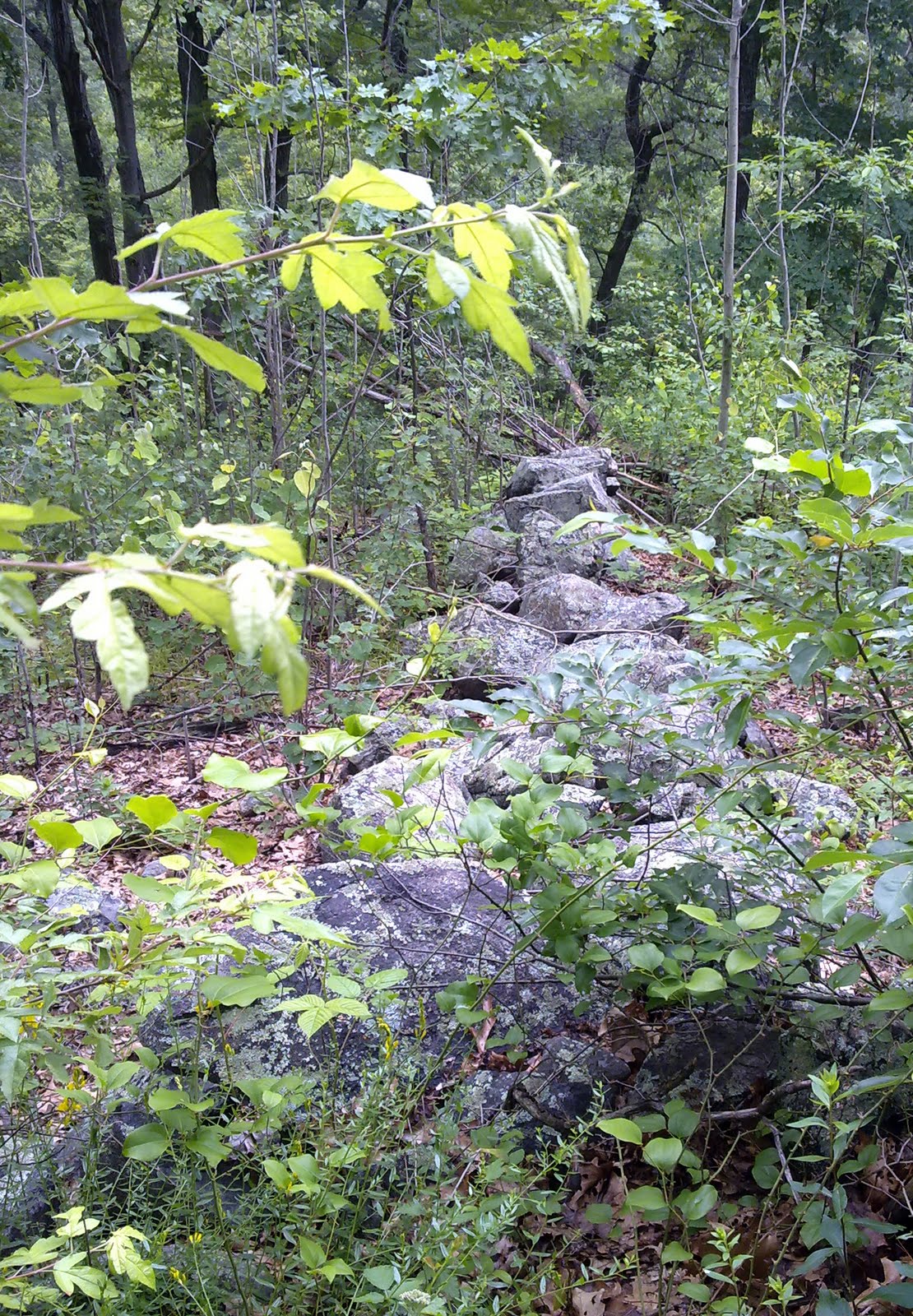
Old stone walls


     The old stone walls around Spring Pond are a monument of the early settlers, rooting to stories of the past, lining the old Crowninshield and Fay Estate, and other farmlands.  Remnants of the New World are a pleasant reminder to sightseers who discover them in nature, running along the old lands of Spring Pond, in Lynn, Peabody and Salem, MA.


Spring Pond nomination


Spring Pond, with its dramatic facing hillsides, fragile watershed, and history-laden regions surrounding the old estate of the notable Fays and Crowninshields, has seen tragic fate  many times over the years. Indeed, in a battle to preserve old paradise and historic lore, this site has been threatened by the blasts of vast development. This special place by Spring Pond has left three significant impressions on American History throughout each century, and there is compelling emerging evidence that there is Native American archaeologic significance at the site.
Since the early nineteenth century, historians and conservationists have thundered to revive the important historical areas and arboretum, and to preserve the natural wildlife, but have failed to prevent the shortsighted acts which pose the current encroachment of development there is today.  The storm which once was may have been left silent in past years, but is awakened today by the team efforts of historians and conservationists joined with public leaders in the continued pursuit of old to preserve this treasured area.   
Today, the facing hillsides and old estate of Spring Pond have been nominated to be listed as a Massachusetts Endangered Historic Site with Preservation Massachusetts. The movement has been spearheaded by myself, as a Commissioner of the Lynn Historical Commission, and lifelong admirer of Spring Pond.  Commission Chair Carl Greenler and Commissioner Calvin Anderson support the historical research of the area, and have contributed in the preservation efforts.  Leslie Courtemanche, a conservationist, admirer and author of two books on Spring Pond has joined the efforts to preserve the site and identify rare flora, wetlands, vernal pools, important bird sites, and Pine Barrens.  Richard Randall, an arborist has joined the efforts by helping identify rare species of trees, including those pertaining to history.  Other conservationists and visitors of the site have contributed sharing their findings and supporting preservation.  The Spring Pond Advocates and the likes from facebook.com/SpringPondWoods have joined the efforts, and the recent enlightening event supported by public vote placed Spring Pond Woods as one of the “1,000 Great Places in Massachusetts”.  The storm of support today has led to say “enough is enough”.  We must preserve this limited resource we have left, treasured by all.   
Some of the first significant historical impressions made were in the day of the Third Plantation of the Massachusetts Bay Colony.  In 1700, an early colonist was drawn to the hillside estate by Spring Pond. Thus, the name of Dr. John Casper Richter Von Crowninshield (Johannes Kaspar Richter Von Kronenscheldt, as first spelled) has long been among  the first families to settle in this country and the first in the USA to descend the respectable (Boston Brahmin) Crowninshield Family. Later generations became quite prominent in contributing to Massachusetts and the nation’s affairs, all while cradled in the countryside of Spring Pond.  
Among the notables from the Crowninshield family line whose history began at Spring Pond, was Louise E. du Pont Crowninshield, wife of Francis Boardman Crowninshield. She was known as one of America's first major historical preservationists and a founding member of the National Trust for Historic Preservation, which partners with Preservation Massachusetts.
The second impression made in history was in 1669 and again in 1793, when the colonial divisions between townships was drawn using the spring at Spring Pond as the starting bench mark to create the city boundaries we have today.  Spring Pond would ‘slake the thirst’ of the people of now Peabody, Lynn and Salem.  In 1669, the spring was used to establish the boundary between Lynn and Salem, then in 1793 when Salem divided into another township, the borders were reestablished based on the spring.  The stone bench mark remains at water's edge of Spring Pond engraved with the initials of each township signifying on each face:   L (for Lynn), P (for Peabody) and S (for Salem).
The third impression made in the country’s history was in 1847 to 1865, when a man of English stock, Richard Sullivan Fay, Esq. was drawn to occupy the 500 acre estate, on the hillsides surrounding the legendary Spring Pond. In 1853 he created a paradise of great variety including rare and exotic trees and flora, importing nature’s beauty from all parts of the world. The Fay Estate is notable due to the introduction of species for the first time in the United States.  Among those species believed to have been seen here first in the country, is the American Tulip.   
Another one of Richard Sullivan Fay’s contributions to American history was in 1862, near the beginning of the Civil War, where he commissioned an army at his own expense.  Officers and members of the 38th regiment of Massachusetts unanimously voted to name the company in his honor as the “Fay Light Guard”.  The Fay Light Guard was attached to the 39th Massachusetts Regiment and fought at Port Hudson, Cane River, Mansion Plains, Winchester, Fisher’s Hill and Cedar Creek.  
Many of the trees and shrubs planted by Mr. Fay escaped the butcher block in the early nineteenth century when the old estate was divided for development. They still stand and many have off-spring  growing in the beautiful rare forest we have today surrounding Spring Pond.   The trees and shrubs originated from all parts of the world, remain today in healthy condition, and are inventoried as follows:  Jasmine- native to the Mediterranean; Bitter Night Shade- native to the Mediterranean in Europe or Asia; Mock-orange- native to Americas, Asia or southeast Europe; Asiatic Day Flower- native to east or south Asia; Lemon mint- native to the Mediterranean in Europe;  Bamboo- native to east Asia; Red Oak- unique species; Norway Spruce- native to Europe; Black Locus- native to southeastern United States; Tulip Tree- unidentified species; Austrian Pine- native to Europe; European Mountain Ash- native to the Mediterranean in Europe or Asia; Birch- unique species, Sasafras, native to Americas and Asia;  Mulberry- native to the subtropical regions of Asia, Africa, Europe or Americas;  Scotch Pine- native to Europe or Asia;  Missletoe- native to Great Britain or Europe; Rhododendrum- native to southern Asia, southern Europe, northern Australia or southern Americas; Wood Hyacinth- native to Europe and the Mediterranean;  Elm- native to Asia;  and other unique flora remaining unidentified.  Among the flora is a variety of trees from North America such as:  Mountain Laurel, Honey Locus, Atlantic White Cedar, American Beech, American White Birch, Larch Tamarack, Sugar Maple, and Lady’s Slippers Orchids.
The flora and trees were assisted to grow by Richard S. Fay in accordance with the divine law. Washington Irving, friend of Mr. Fay, would have said: “He who plants an oak, looks forward to future ages, and plants for prosperity.  Nothing can be less selfish than this.  He cannot expect to sit in its shade, nor enjoy its shelter; but he exults in the idea that the acorn which he has buried in the earth grow up into a lofty pile, and shall keep on flourishing and increasing and benefiting mankind, long after he shall have ceased to tread his paternal fields.”
The areas of Spring Pond have been divided and coveted throughout history by the three townships of Lynn, Peabody and Salem, Ma, and before this possibly between the Naumkeag Native Americans and early colonists.  Eminent historic personages coveted the retreat, among whom were Alonzo Lewis, Samuel W. Cole, Cotton and Increase Mather, Marquis de Lafayette, and William Bentley D.D., Robert C. Winthrop, George W. Lyons, Chief Justice Bigelow, George Peabody, Charles G. Loring, Stephen Salisbury, George B. Loring, Leavitt Saltonstall and C.E.L. Green, one of the famous ‘Lynn Beach Painters’ who painted Fay Farm.  A few have written books and diaries of Spring Pond, describing this once famous transcendental retreat in the same beautiful images that would be experienced today. 
With the historical significance of Spring Pond, SPA (Spring Pond Advocates) hopes to raise the awareness of how important it is to preserve our landscapes of heritage and create Spring Pond Reservation or Sanctuary, and a Historic Tree District in developed areas.
The areas may be unprotected historically but are protected environmentally, where by having assurance through map studies, it seems the area is mostly protected by conservation land, Water Surface Protection Areas,  DEP wetlands and Pine Barrens.  The Fay Estate and nearby Floating Bridge have been nominated for inclusion in the Massachusetts Historical Society designations.
A “Circuit Rider” from Preservation Massachusetts, partnered with The National Trust for Historic Preservation has visited the site.  The nomination will undergo a competitive review process among with other sites, and the selection committee will meet in mid September.