Welcome. A moment-to-moment story...
Showing posts with label 1700 Crowninshield (Kronenscheldt). Show all posts

Benjamin W. Crowninshield speaks from his grave

Thank you to Tom Osborne for sharing this image .


      One of the first impressions made in history was in the day of the Third Plantation of the Massachusetts Bay Colony. In 1700, an early settler was drawn to an estate on the hillsides by Spring Pond, in the name of Dr. John Casper Richter Von Crowninshield (Johannes Kaspar Richter Von Kronenscheldt, as first spelled), who was among one of the first families to settle in this country and the first in the country to descend the respectable (Boston Brahmin) Crowninshield Family of Boston whose later generations became so prominent in Massachusetts affairs, cradled by Spring Pond.

Among the heirs of the family country estate and family line was Benjamin Williams Crowninshield.  He served as United States Secretary of the Navy, Representative of the United States Congress, member of the Massachusetts State Senate, in the Massachusetts House of Representatives, and became one of the first directors of the Merchant's Bank of Salem creating the East India Trade of Salem; The USS Crowninshield Naval Destroyer was named in his honor.

Old stone walls


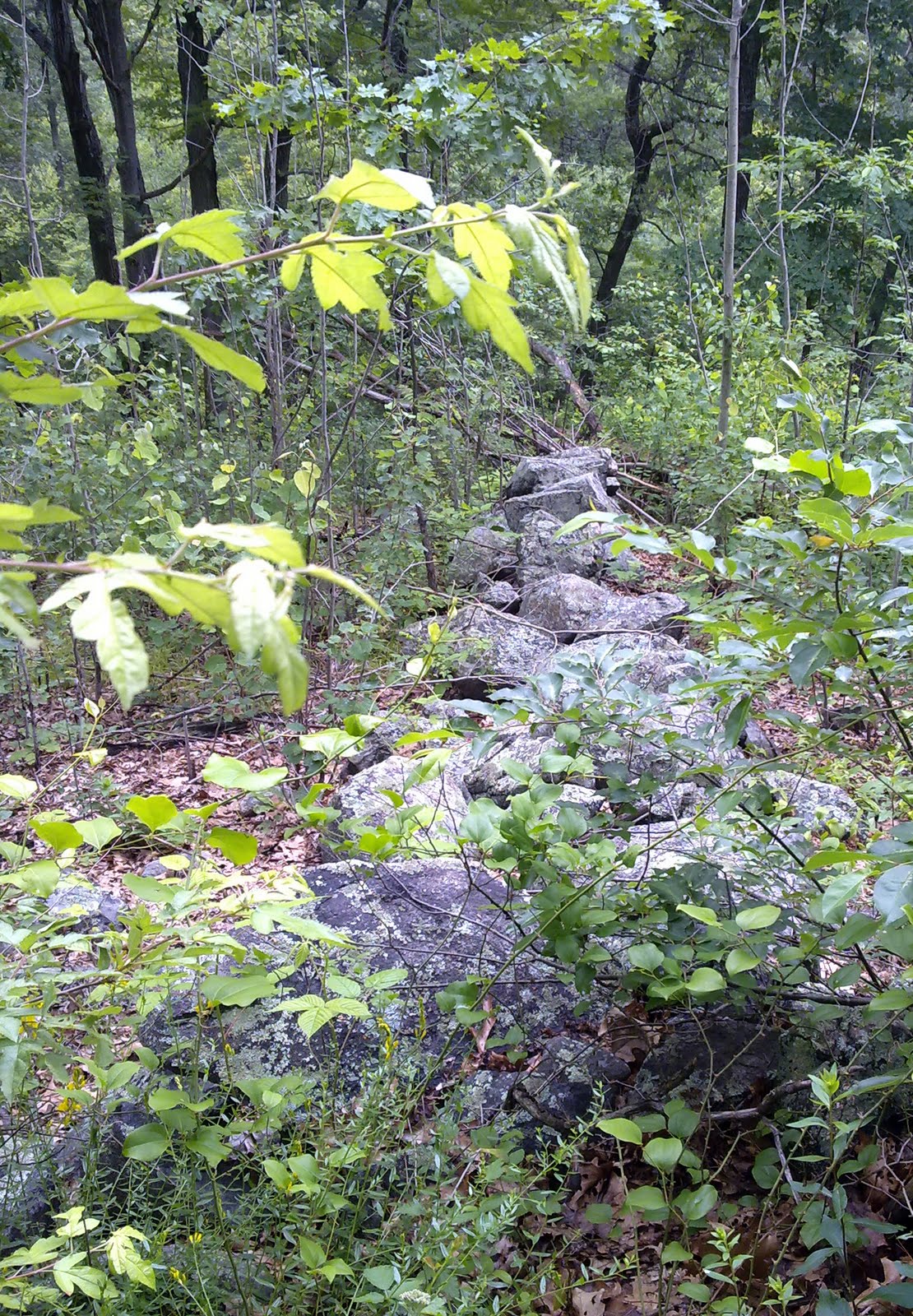
     The old stone walls around Spring Pond are a monument of the early settlers, rooting to stories of the past, lining the old Crowninshield and Fay Estate, and other farmlands.  Remnants of the New World are a pleasant reminder to sightseers who discover them in nature, running along the old lands of Spring Pond, in Lynn, Peabody and Salem, MA.


Spring Pond nomination


Spring Pond, with its dramatic facing hillsides, fragile watershed, and history-laden regions surrounding the old estate of the notable Fays and Crowninshields, has seen tragic fate  many times over the years. Indeed, in a battle to preserve old paradise and historic lore, this site has been threatened by the blasts of vast development. This special place by Spring Pond has left three significant impressions on American History throughout each century, and there is compelling emerging evidence that there is Native American archaeologic significance at the site.
Since the early nineteenth century, historians and conservationists have thundered to revive the important historical areas and arboretum, and to preserve the natural wildlife, but have failed to prevent the shortsighted acts which pose the current encroachment of development there is today.  The storm which once was may have been left silent in past years, but is awakened today by the team efforts of historians and conservationists joined with public leaders in the continued pursuit of old to preserve this treasured area.   
Today, the facing hillsides and old estate of Spring Pond have been nominated to be listed as a Massachusetts Endangered Historic Site with Preservation Massachusetts. The movement has been spearheaded by myself, as a Commissioner of the Lynn Historical Commission, and lifelong admirer of Spring Pond.  Commission Chair Carl Greenler and Commissioner Calvin Anderson support the historical research of the area, and have contributed in the preservation efforts.  Leslie Courtemanche, a conservationist, admirer and author of two books on Spring Pond has joined the efforts to preserve the site and identify rare flora, wetlands, vernal pools, important bird sites, and Pine Barrens.  Richard Randall, an arborist has joined the efforts by helping identify rare species of trees, including those pertaining to history.  Other conservationists and visitors of the site have contributed sharing their findings and supporting preservation.  The Spring Pond Advocates and the likes from facebook.com/SpringPondWoods have joined the efforts, and the recent enlightening event supported by public vote placed Spring Pond Woods as one of the “1,000 Great Places in Massachusetts”.  The storm of support today has led to say “enough is enough”.  We must preserve this limited resource we have left, treasured by all.   
Some of the first significant historical impressions made were in the day of the Third Plantation of the Massachusetts Bay Colony.  In 1700, an early colonist was drawn to the hillside estate by Spring Pond. Thus, the name of Dr. John Casper Richter Von Crowninshield (Johannes Kaspar Richter Von Kronenscheldt, as first spelled) has long been among  the first families to settle in this country and the first in the USA to descend the respectable (Boston Brahmin) Crowninshield Family. Later generations became quite prominent in contributing to Massachusetts and the nation’s affairs, all while cradled in the countryside of Spring Pond.  
Among the notables from the Crowninshield family line whose history began at Spring Pond, was Louise E. du Pont Crowninshield, wife of Francis Boardman Crowninshield. She was known as one of America's first major historical preservationists and a founding member of the National Trust for Historic Preservation, which partners with Preservation Massachusetts.
The second impression made in history was in 1669 and again in 1793, when the colonial divisions between townships was drawn using the spring at Spring Pond as the starting bench mark to create the city boundaries we have today.  Spring Pond would ‘slake the thirst’ of the people of now Peabody, Lynn and Salem.  In 1669, the spring was used to establish the boundary between Lynn and Salem, then in 1793 when Salem divided into another township, the borders were reestablished based on the spring.  The stone bench mark remains at water's edge of Spring Pond engraved with the initials of each township signifying on each face:   L (for Lynn), P (for Peabody) and S (for Salem).
The third impression made in the country’s history was in 1847 to 1865, when a man of English stock, Richard Sullivan Fay, Esq. was drawn to occupy the 500 acre estate, on the hillsides surrounding the legendary Spring Pond. In 1853 he created a paradise of great variety including rare and exotic trees and flora, importing nature’s beauty from all parts of the world. The Fay Estate is notable due to the introduction of species for the first time in the United States.  Among those species believed to have been seen here first in the country, is the American Tulip.   
Another one of Richard Sullivan Fay’s contributions to American history was in 1862, near the beginning of the Civil War, where he commissioned an army at his own expense.  Officers and members of the 38th regiment of Massachusetts unanimously voted to name the company in his honor as the “Fay Light Guard”.  The Fay Light Guard was attached to the 39th Massachusetts Regiment and fought at Port Hudson, Cane River, Mansion Plains, Winchester, Fisher’s Hill and Cedar Creek.  
Many of the trees and shrubs planted by Mr. Fay escaped the butcher block in the early nineteenth century when the old estate was divided for development. They still stand and many have off-spring  growing in the beautiful rare forest we have today surrounding Spring Pond.   The trees and shrubs originated from all parts of the world, remain today in healthy condition, and are inventoried as follows:  Jasmine- native to the Mediterranean; Bitter Night Shade- native to the Mediterranean in Europe or Asia; Mock-orange- native to Americas, Asia or southeast Europe; Asiatic Day Flower- native to east or south Asia; Lemon mint- native to the Mediterranean in Europe;  Bamboo- native to east Asia; Red Oak- unique species; Norway Spruce- native to Europe; Black Locus- native to southeastern United States; Tulip Tree- unidentified species; Austrian Pine- native to Europe; European Mountain Ash- native to the Mediterranean in Europe or Asia; Birch- unique species, Sasafras, native to Americas and Asia;  Mulberry- native to the subtropical regions of Asia, Africa, Europe or Americas;  Scotch Pine- native to Europe or Asia;  Missletoe- native to Great Britain or Europe; Rhododendrum- native to southern Asia, southern Europe, northern Australia or southern Americas; Wood Hyacinth- native to Europe and the Mediterranean;  Elm- native to Asia;  and other unique flora remaining unidentified.  Among the flora is a variety of trees from North America such as:  Mountain Laurel, Honey Locus, Atlantic White Cedar, American Beech, American White Birch, Larch Tamarack, Sugar Maple, and Lady’s Slippers Orchids.
The flora and trees were assisted to grow by Richard S. Fay in accordance with the divine law. Washington Irving, friend of Mr. Fay, would have said: “He who plants an oak, looks forward to future ages, and plants for prosperity.  Nothing can be less selfish than this.  He cannot expect to sit in its shade, nor enjoy its shelter; but he exults in the idea that the acorn which he has buried in the earth grow up into a lofty pile, and shall keep on flourishing and increasing and benefiting mankind, long after he shall have ceased to tread his paternal fields.”
The areas of Spring Pond have been divided and coveted throughout history by the three townships of Lynn, Peabody and Salem, Ma, and before this possibly between the Naumkeag Native Americans and early colonists.  Eminent historic personages coveted the retreat, among whom were Alonzo Lewis, Samuel W. Cole, Cotton and Increase Mather, Marquis de Lafayette, and William Bentley D.D., Robert C. Winthrop, George W. Lyons, Chief Justice Bigelow, George Peabody, Charles G. Loring, Stephen Salisbury, George B. Loring, Leavitt Saltonstall and C.E.L. Green, one of the famous ‘Lynn Beach Painters’ who painted Fay Farm.  A few have written books and diaries of Spring Pond, describing this once famous transcendental retreat in the same beautiful images that would be experienced today. 
With the historical significance of Spring Pond, SPA (Spring Pond Advocates) hopes to raise the awareness of how important it is to preserve our landscapes of heritage and create Spring Pond Reservation or Sanctuary, and a Historic Tree District in developed areas.
The areas may be unprotected historically but are protected environmentally, where by having assurance through map studies, it seems the area is mostly protected by conservation land, Water Surface Protection Areas,  DEP wetlands and Pine Barrens.  The Fay Estate and nearby Floating Bridge have been nominated for inclusion in the Massachusetts Historical Society designations.
A “Circuit Rider” from Preservation Massachusetts, partnered with The National Trust for Historic Preservation has visited the site.  The nomination will undergo a competitive review process among with other sites, and the selection committee will meet in mid September.  

National Trust for Historic Preservation and Preservation Massachusetts

      The amount of historical research uncovered for this site has been impressing to historians, and before one could visit the site,  I hoped the site was even more impressing.  A 'Circuit Rider' from the National Trust for Historic Preservation (NTHP) and Preservation Massachusetts could not be more impressed when they visited the site last week :)

     The outlook of others strengthens belief that "This Place (does) Matter".   These wild and dramatic natural landscapes of heritage are windows to the past, reminiscent with throbbing memory.. of history persistent throughout the centuries... shared between 3 townships... fighting a common cause on both sides of the track... between those many who find it momentous and those few who do not care, thereby creating a perfect formula to nominate this site to be enlisted as a Mass Endangered Historic site.


     The research of Spring Pond leads to find that the history here relates to the history of the National Trust for Historic Preservation!!!   Louise E. du Pont Crowninshield, wife of Francis Boardman Crowninshield, is known as one of America's first major historical preservationists and was a founding member of the National Trust for Historic Preservation.  Crowninshield's ancestor is Dr. John Casper Richter Von Crowninshield (Johannes Kaspar Richter Von Kronenscheldt, as first spelled),  who was one of the first families to settle in this country and the first in the country to descend the respectable (Boston Brahmin) Crowninshield Family of Boston... who began his family from a little cottage, settled by Spring Pond c1700.   


Cotton and Increase Mather

c1670-1723   Cotton Mather with his father Increase Mather (pictured), were frequent visitors of the retreat by Spring Pond and the estate of Casper Van Crowninshield (Kronenscheldt).  Cotton Mather was an influential New England Puritan Minister, Harvard Graduate, Pastor of Boston’s original North Church, author of more than 450 books and pamplets, and his writings were influential in the Salem Witch trials.  One of Cotton's elaborate works of writings extols the virtues of the Spring Pond Area in the Memoirs of Increase Mather under title of Parentator or Remarkables of Dr. Increase Mather.  In it he relates to the healing waters and retreat of the Spring Pond area.    Increase Mather was an early President of Harvard College and Rector, a New England Puritan Minister, Leader of the Massachusetts Bay Colony and Province of Massachusetts Bay, and was a visitor who took a lodging at the retreat of Mineral Spring Pond, to recover from his illness and drink from the healing waters of the springs.


In 1724, Cotton Mather Published his father’s, Increase Mather’s diaries:  Parentator or Remarkables of Dr. Increase Mather, by Cotton Mather.  In this publication, Cotton Mather shares excerpts from the diary of his father Increase Mather, relating the recovery of his illness to the healing waters of Mineral Spring Pond.


   Quotes from the publication Parentator or Remarkables of Dr. Increase Mather are as follows:
In the Spring of 1670, he returned unto his Beloved Pulpit: And made his first Sermon on those words: PSal XCIV.12. Blessed is the Man thou Chastenest, O Lord, and teachest out of thy Law. But being still under feeble circumstances, and having a strong impression on his mind, that the drinking of the mineral waters might be of use to him, he took a lodging at Lyn, where he might repair every morning, to a spring there, which was then famous through the country. I will transcribe a passage of two from his diary, which he wrote in the time of his being there.
One is this. "At the Waters, retiring myself under the Trees, I poured out my Soul before the Lord, and then met with Him. I did humbly and believingly (through the Lord's Grace towards me) betake myself unto God, and unto Jesus Christ, for the Healing of my Bodily Distempers. I Believed, Because, though Sin had brought these Distempers on me, yet God had accepted the Sacrifice, which Christ has offered for my Sin. Because also God had formerly heard my Prayers. And because Christ has Redeemed my Body as well as my Soul. Christ intends to bestow Eternal Glory on My Body as well as on my Soul: And therefore He will not deny unto me so small a matter as Bodily Health, which is nothing in comparison of Eternal Glory. Finally, Because I desire Health for the Lord's Sake, and not for my own; even that I may do Service for Him. After Prayer, I went away Inwardly Rejoicing, because I have prevailed! I have Prevailed for Mercy!"
Another is this. "At the Waters. There again the Lord enabled me with Tears, and Persuasion of a Gracious Answer to pour out my Desires before Him for both Bodily and Spiritual Healing to be vouchsafed unto me My dear God in Jesus Christ, will certainly accept of some Service from me: Blessed be His Glorius name forever and ever: Amen! Amen! "It was not long before the Lost Jewel was restored onto me. Nevertheless, in the way to it, he met with many grievous Pangs of Overwhelming Melancholy: of which he also says, 'I found the Prayer of Faith to be the best Remedy against it."
But of this also, I will from his diary, only note a couple of passages.
One is this; "As I was returning home from Lyn, at the end of the Town, a poor Godly Woman (whose name is Mansfield) desired those that Rode with me to go forward, for she must needs speak with me. When I stop'd, O Syr, (said she, with much affection, and many Tears) I am troubled at my condition. I am afraid, that I grieve the Good Spirit of God, by not being so cheerful as I ought to be. I am Dejected, and my Soul is Disquieted; And when I meet with afflictions, I lay them too much to Heart; and I doubt, & herein offend, so Gracious a Father, as God has been unto me; a God who has done much for me, and sometimes manifested Himself unto me. I was astonished to hear her speak, and see her come thus to me for some Relief in such Temptation. I concluded that this poor Woman (who little thought so herself) was a Messenger sent from God unto me; For she spoke to my very condition, as if He that knows all things had put Words into her Mouth. Oh! Let the Great Physician of Souls (said I then) Look upon me, and let Him Heal me, and give me Power of Grace to be more than a Conqueror over my Special Infirmities."

The Crowninshields and prior residents.

Prior to 1700 after the occupancy of the Native American Naumkeag and other tribes in all territories, the land was then occupied by Lynn, Peabody and Salem’s early European settlers. 


On June 10th, 1696 Daniel Richards, mariner of Lynn, released lands of inheritance at Spring Pond to Robert Bronsdon.  In January, 1698, Robert Bronsdon sold the Spring Pond estate to John Clifford of Salem.  Elizabeth (Clifford) Allen and Jacob Allen settled on the lands near Spring Pond.

c.1700, Dr. John
 Casper Richter Von Crowninshield (Johannes Kaspar Richter Von Kronenscheldt, as first spelled), a physician from Germany, descendant of the ennobled family of the Kingdom of Saxony, ancestor of the respectable Boston Brahmin Crowninshield Family of Boston, married Elizabeth- daughter of Jacob and Elizabeth (Clifford) Allen of Salem.  He purchased the land near Spring Pond from Elizabeth (Clifford) Allen, widow of Jacob Allen.  He settled on the land in the interest of retreat and farming. Eminent personages were entertained at his retreat, including Cotton and Increase Mather.